

Total Chimney Care: Professional Chimney Sweeping and Creosote Removal in Branford, CT
Branford, CT homeowners know that a roaring fire is the perfect antidote to a chilly evening off the Long Island Sound, but that cozy atmosphere relies on a clean and clear venting system. At Total Chimney Care, we specialize in comprehensive chimney sweeping designed to remove the dangerous byproducts of combustion that accumulate over time. Our team is dedicated to helping you maintain your hearth so it operates as efficiently as possible, protecting your home from the hidden risks of soot and creosote buildup. Whether you are burning seasoned hardwood or utilizing a localized wood-burning insert, our sweeping process ensures that your flue is clear and your home remains a comfortable haven throughout the New England seasons.
What Is Creosote & How Does It Affect My Chimney’s Performance?
Every time you burn wood in your fireplace, a substance called creosote is created. It is a natural byproduct of the oils and moisture found in wood that haven’t been fully burned off. As the smoke rises through the relatively cooler chimney, it condenses along the interior walls of the flue. In Branford, where the coastal humidity can linger even in the winter, this condensation process can be even more pronounced. Creosote is highly flammable and is the leading cause of chimney fires, making its regular removal a critical part of home maintenance.
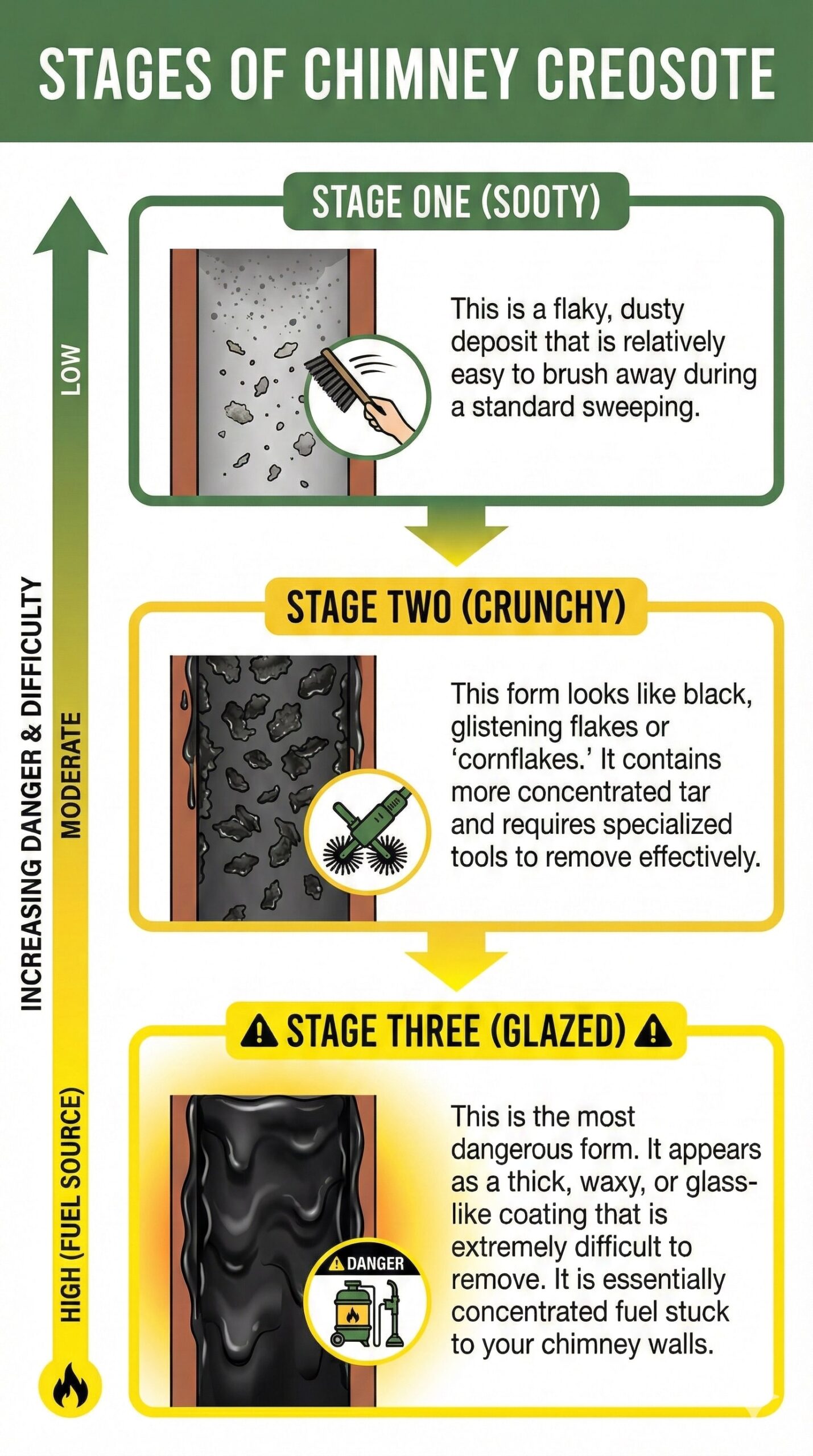
- Stage One (Sooty): This is a flaky, dusty deposit that is relatively easy to brush away during a standard sweeping.
- Stage Two (Crunchy): This form looks like black, glistening flakes or “cornflakes.” It contains more concentrated tar and requires specialized tools to remove effectively.
- Stage Three (Glazed): This is the most dangerous form. It appears as a thick, waxy, or glass-like coating that is extremely difficult to remove. It is essentially concentrated fuel stuck to your chimney walls.
Our professional sweeping process focuses on identifying which stage of creosote is present in your system. We utilize specialized brushes and high-powered vacuums to ensure that these deposits are removed without making a mess in your living room. By stripping away these layers, we allow your chimney to breathe, ensuring that smoke and dangerous gases are channeled out of your home as effectively as possible.
Your Branford, CT Chimney Company: Supporting Our Coastal Neighbors
Total Chimney Care is proud to be a part of the Branford community, a town that perfectly captures the spirit of coastal Connecticut. From the historic homes in the Blackstone district to the modern builds overlooking the Thimble Islands, we have spent years navigating the unique challenges that our local architecture and climate present. We understand that residents here value reliability and craftsmanship, which is why we approach every chimney sweeping job with a focus on detail and long-term care.
When we aren’t helping neighbors prepare their fireplaces for winter, you might find our team enjoying the local scenery at Branford Point or grabbing a bite near the Town Green. We love the vibrant energy of the Stony Creek area and the peaceful nature trails that make this town so special. Serving Branford isn’t just a job for us; it’s about ensuring that the families in our community can enjoy their homes with one less thing to worry about. We are committed to providing services that keep your masonry beautiful and your venting systems as functional as possible.
How Do Different Seasons & Wood Types Contribute to Rapid Creosote Accumulation?
In a town like Branford, the way you use your fireplace changes with the weather, and those habits directly impact how quickly creosote builds up. Many people don’t realize that the type of wood you burn and the temperature outside can drastically change the chemistry inside your flue. If you are burning “green” or unseasoned wood—which is wood that hasn’t dried for at least six to twelve months—the energy of the fire is spent evaporating the water in the log rather than creating heat. This results in “cool” smoke that moves slowly and sticks to the flue walls almost instantly.
- Spring and Fall “Smoldering”: During the transitional months, homeowners often build smaller, cooler fires just to take the chill off. These low-temperature fires produce significantly more creosote because the smoke doesn’t have the velocity to exit the chimney quickly.
- Winter “Workhorse” Fires: When the temperature drops significantly, we tend to run our fireplaces longer. While hotter fires burn cleaner, the sheer volume of wood consumed over a long Branford winter means that even the best-behaved fireplace will accumulate a significant layer of soot by spring.
- The Impact of Salt Air: The salt-heavy air in our coastal environment can sometimes lead to faster oxidation of metal components, which can create rough surfaces inside the flue where creosote can easily grab hold and begin to build up.
When we perform a sweeping, we don’t just clear the debris; we talk to you about your burning habits. We can help you identify if the wood you’re using is contributing to an oversized creosote problem and suggest ways to manage your fires so your chimney stays cleaner for longer periods between professional visits.
Are Old, Unlined Chimneys More Prone To Hidden Interior Decay Even When The Exterior Bricks Look Strong?
Many of the beautiful historic homes in Branford were built before modern building codes required flue liners. An unlined chimney is essentially a brick-and-mortar tunnel. While these structures were built with incredible skill, they are particularly susceptible to the corrosive nature of creosote and the condensation that occurs during a fire. Over decades, the acidic byproducts of wood smoke can eat away at the mortar joints inside the chimney – the areas you can’t see from the outside.
- Internal Erosion: As the mortar between the bricks inside the flue dissolves, gaps are created. These gaps allow heat and sparks to reach the wooden framing of your house, which is a significant fire hazard.
- Creosote Seepage: Without a smooth liner, creosote can seep into the cracks and pores of the bricks themselves. Once creosote is “inside” the masonry, it is nearly impossible to remove with a standard brush, and it can continue to smell or even ignite inside the wall.
- Structural Instability: When the internal mortar is gone, the bricks can shift. This can lead to a collapse of the internal “wythe” walls, which might block the chimney entirely and force smoke and carbon monoxide back into your home.
During our sweeping service, we use high-resolution cameras to inspect the interior of your flue. This is especially important for our neighbors with older homes. We look for those hidden gaps and signs of “soft” mortar that indicate your chimney might be decaying from the inside out. If we find these issues, we can discuss options for relining to make your fireplace as safer as possible for modern use.
What Happens If You Light A Fire When The Flue Is Still Damp After Heavy Rain?
We get our fair share of Nor’easters and heavy rain in Branford, and if your chimney cap is damaged or missing, a significant amount of water can enter the flue. Lighting a fire when the interior of your chimney is damp creates a “steam room” effect that is detrimental to both the structure and the cleanliness of the system. The moisture on the flue walls acts like a magnet for every particle of soot and smoke that rises from the fire.
- Creosote Paste: The smoke hits the wet walls and turns into a thick, muddy paste. As the fire heats up, this paste bakes onto the walls, often turning into that difficult “Stage Three” glazed creosote that is a nightmare to remove.
- Odor Problems: As mentioned before, moisture rehydrates old creosote. Lighting a fire in a damp flue will often drive those campfire or “ashy” smells deep into your furniture and carpets as the initial steam carries the scent into the room.
- Masonry Damage: The rapid heating of water trapped in the brick or mortar can cause “spalling,” where the face of the brick pops off due to the internal pressure of the steam trying to escape.
If you suspect your chimney is wet after a big storm, it is best to let it dry out or have us come take a look. Our sweeping services often include an inspection of your chimney cap and crown to ensure that water isn’t getting in where it shouldn’t. Keeping the flue dry is one of the best ways to ensure your fireplace operates as efficiently as possible.
Is It Okay To Skip a Chimney Inspection If I Didn’t Use My Fireplace Much in a Year?
This is a common question we hear from Branford residents, especially after a mild winter. While it might seem like you can save money by skipping a year, the chimney’s condition is affected by much more than just the fires you light. A chimney is a vent for your home 365 days a year, and the “off-season” can be just as hard on it as the burning season.
- Animal Intrusions: During the spring and summer, birds, squirrels, and raccoons often see your chimney as a perfect nesting spot. A single nest can completely block a flue, leading to a dangerous backup of smoke or carbon monoxide the first time you light a fire in the fall.
- Environmental Degradation: Our coastal weather—the salt, the humidity, and the wind—constantly works against your masonry. An annual inspection allows us to catch small cracks or minor leaks before they turn into expensive structural repairs.
- Debris Accumulation: Even if you don’t burn wood, leaves and twigs can fall into the chimney and settle on the smoke shelf. This debris can trap moisture and cause rot or provide a fuel source for a small chimney fire.
At Total Chimney Care, we recommend an annual checkup to ensure that no “surprises” have moved into your chimney over the summer. Our goal is to make sure that when you are ready for that first fire of the season, your system is clear, clean, and ready to perform as efficiently as possible.
Contact Total Chimney Care for Your Branford, CT Chimney Sweeping Needs
Don’t let creosote and soot compromise the comfort and safety of your home. Our team at Total Chimney Care is ready to provide the professional, thorough sweeping service that Branford homeowners have come to trust. We combine traditional techniques with modern technology to ensure your chimney is free of blockages and dangerous deposits. Whether you have a historic fireplace or a modern wood stove, we have the expertise to keep it in top condition for years to come. Schedule your chimney sweeping today.