

Total Chimney Care: Expert Chimney Repair Services in Fairfield CT
At Total Chimney Care, we’re committed to helping Fairfield homeowners keep their chimneys working as safely and as efficiently as possible with expert chimney repair solutions tailored to local homes. Whether you’re dealing with cracking masonry, leaks, leaning chimney sections, damaged crowns, or interior liner issues, our team brings decades of skill and craftsmanship to every project. Fairfield homes range from historic coastal properties to modern builds, and we understand how age, weather, fuel type, and even local wind patterns can affect chimney integrity. When you call our company, you’re getting a partner that knows this area, knows its climate, and knows how to extend the life of your chimney.
What Chimney Repairs Do Most Fairfield Homeowners Need?
Many homeowners call us because they’ve noticed visible deterioration or performance problems, but some of the most serious issues are the ones that hide inside the structure. That’s why we encourage annual inspections to catch problems early. Common repair needs include:
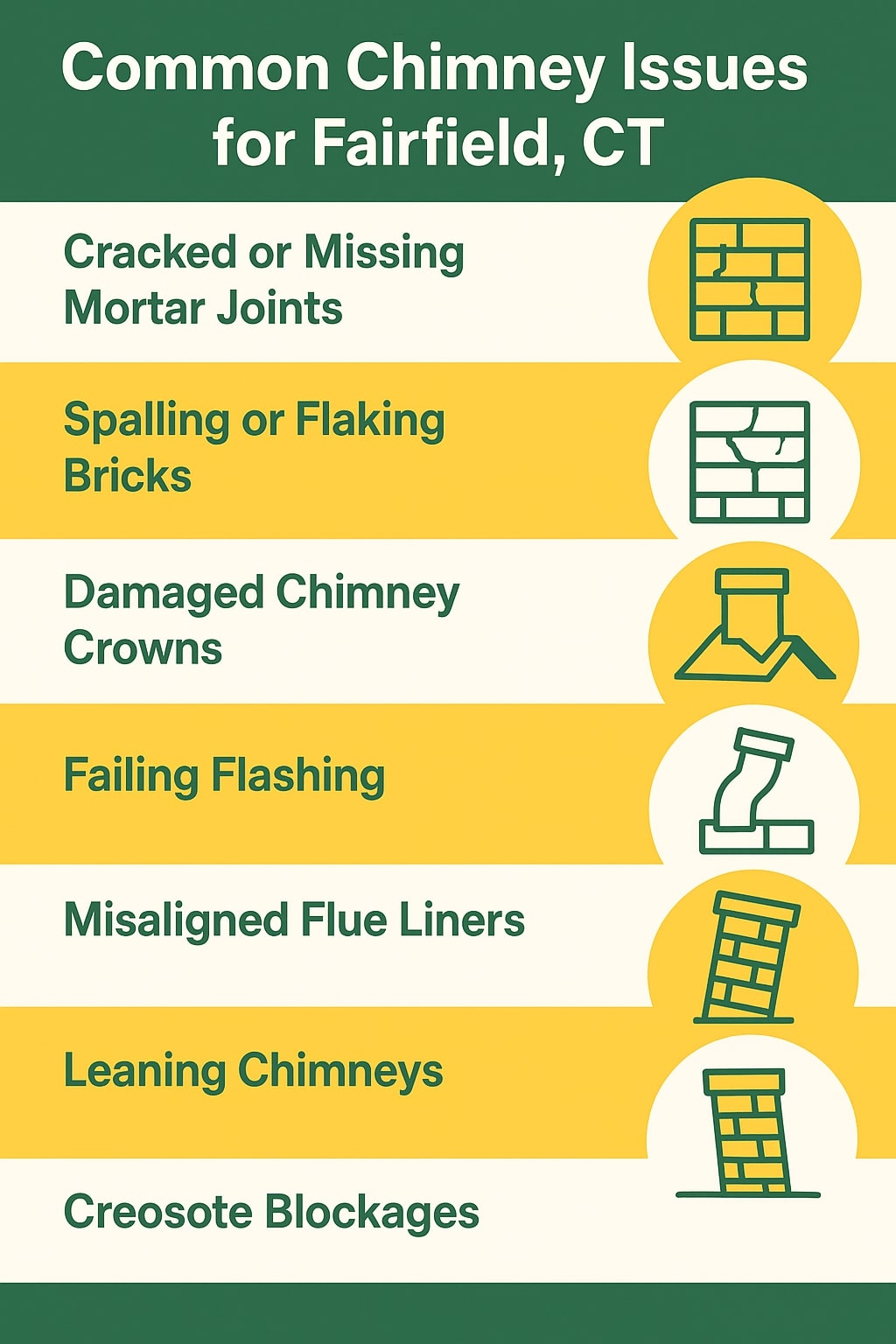
- Cracked or missing mortar joints
- Spalling or flaking bricks from freeze–thaw weathering
- Damaged or deteriorated chimney crowns
- Leaks caused by failing flashing or masonry gaps
- Misaligned or disconnected flue liners
- Leaning chimneys from settling or water-damaged footings
- Creosote damage and flue blockages
Knowing when to call a professional can help you prevent high repair costs later. Even small cracks can widen after one tough winter, and water intrusion can escalate surprisingly quickly. Our job is to identify the root cause and repair the chimney before those issues spread.
Fairfield CT: A Community We’re Proud to Serve
Fairfield is known for its coastal scenery, beautiful beaches, and charming neighborhoods that blend historic New England architecture with modern convenience. From strolling along Penfield Beach to exploring the historic Fairfield Museum and History Center, it’s a town full of character. Residents enjoy outdoor activities at Lake Mohegan, local eating spots in the downtown district, and community events on the Town Green. Fairfield is a place where people take pride in their homes, and we’re honored to help maintain that comfort and charm by keeping fireplaces and chimneys in top condition.
How Does Fairfield’s Coastal Climate Contribute to Chimney Deterioration?
Coastal communities like Fairfield face unique chimney challenges. Salt air and moisture both accelerate masonry decay, especially in older chimneys that may have softer historical brick or aging mortar. When salt-laden moisture penetrates brick or mortar, it can crystallize inside the pores and expand. That leads to cracking, surface flaking, and spalling. Over time the chimney begins to absorb more moisture than it sheds.
High winds from storms off the Long Island Sound also pressurize chimneys, pushing rainwater into hairline cracks and creating negative draft that pulls smoke into the home. If storms loosen flashing, even slightly, that can send water behind the masonry where it begins breaking down the structure from the inside.
Homeowners often ask whether chimneys can hold up during strong coastal storms or high-wind weather. The answer depends on the chimney’s condition, its foundation, and its masonry. A well-maintained chimney stands up far better than one with existing cracks or weakened mortar. That’s why we focus so heavily on preventive repair and early detection. Strengthening weak joints, sealing vulnerable crowns, and ensuring the chimney is properly waterproofed all help it withstand Fairfield’s weather as effectively as possible.
Could Earthquakes or Seismic Vibrations Loosen Mortar or Create Hidden Gaps?
Many people don’t realize small seismic tremors occur throughout Connecticut. They’re usually mild, but even slight ground movement can affect a tall, narrow structure like a chimney. When tremors occur, they can subtly loosen old mortar, shift bricks, or widen existing cracks.
Some homeowners ask whether these vibrations can create dangerous flue gaps. The answer is yes, they can, especially in older unlined chimneys or chimneys that already have structural weaknesses. Interior gaps inside the flue can allow heat or fumes to escape into adjacent walls or attics. These flaws are rarely visible from the outside, which is why we use specialized equipment such as video inspection cameras. These tools help us detect microscopic fractures or liner cracks long before they pose a risk.
If your chimney stands near an area of soil settlement or you live in an older Fairfield colonial with original brick, we recommend periodic flue inspections to ensure those tiny shifts haven’t compromised the system.
How Fast Can Crumbling Mortar Compromise a Chimney’s Stability?
We often hear from homeowners who worry that masonry deterioration might progress faster than expected. And they’re right to take crumbling mortar seriously. Once moisture enters the mortar joints and the freeze–thaw cycle begins, deterioration can accelerate quickly. In some cases, a chimney that looked “mostly fine” in early fall may show significant damage by spring.
In extreme situations, neglected mortar decay can destabilize the upper chimney stack in as little as one season. This is especially true in Fairfield, where winter temperatures repeatedly cross the freezing line. The repeated expansion and contraction of moisture inside bricks can rapidly break the bond between mortar and masonry.
Early warning signs include:
-
Grit or sand accumulating near the base of the chimney
-
Darkened mortar joints that stay damp longer than surrounding areas
-
New hairline cracks forming between bricks
-
Bricks that sound hollow when tapped
-
Slight leaning or subtle widening cracks near the roofline
When we repoint a chimney, we remove crumbling mortar and pack fresh, properly mixed mortar into the joints. This not only restores stability but helps block moisture intrusion, slowing down further deterioration. Keeping up with repointing is one of the most effective ways to extend the chimney’s life.
What Should Fairfield Homeowners Do After a Flood, Hurricane, or Heavy Storm Before Using Their Fireplace?
After major storms, homeowners often ask when it’s safe to use their fireplace again. Hurricanes or floods can send water through the flue, around the flashing, or behind the masonry. Even if the chimney looks fine from the outside, the interior may have absorbed large amounts of moisture.
Lighting a fire in a damp chimney can cause:
- Smoke spillage from poor draft
- Rapid creosote condensation
- Steam pressure inside small cracks
- Sudden brick deterioration
- Strong odors from saturated soot
If the flue liner becomes waterlogged, steam expansion can even widen microscopic cracks. In some cases, storm debris like leaves, windblown trash, and bird nests may get lodged in the flue.
Before using your fireplace after a major weather event, call our team to perform a full inspection. We check for structural displacement, water infiltration, liner damage, and blockages. Addressing these issues early helps your fireplace function as cleanly and as safely as possible during the following season.
Are Older, Unlined Chimneys More Prone to Hidden Damage?
Fairfield has many older homes, and many of those still have original chimneys that were built without liners. While the outside brick may still look solid, the interior of an unlined chimney can deteriorate much faster. Soot, acids, and moisture attack the inner surfaces. Over time the bricks soften, crack, or begin to crumble inward.
Problems we frequently find in older unlined chimneys include:
- Cavities forming behind the interior brick surface
- Mortar erosion caused by acidic soot residue
- Misaligned bricks creating draft restrictions
- Hidden voids between layers of brick
- Flue dimensions that no longer match the appliance
A video scan helps us identify hidden hazards. If we find deterioration, relining is often the safest solution. Stainless steel liners offer durability, improved draft, and better protection for surrounding building materials.
Trust Total Chimney Care for Chimney Repair in Fairfield CT
Our company is committed to protecting Fairfield homes with professional, thorough chimney repair work you can rely on. Whether your chimney is leaking, leaning, cracking, or just overdue for evaluation, we’re here to restore it so it performs as safely and as reliably as possible.
If you’re concerned about your chimney or have noticed early signs of trouble, call Total Chimney Care today. We’ll assess the issue, explain your options, and provide long-lasting chimney and fireplace repair solutions that keep your home comfortable season after season.